
Loc de acțiune – Crețești
Delia Popa
Curated by Julie Crenn
———————————————————————————————–
Anca Poterasu Gallery, Bucarest
15 May – 1st July 2025
———————————————————————————————–
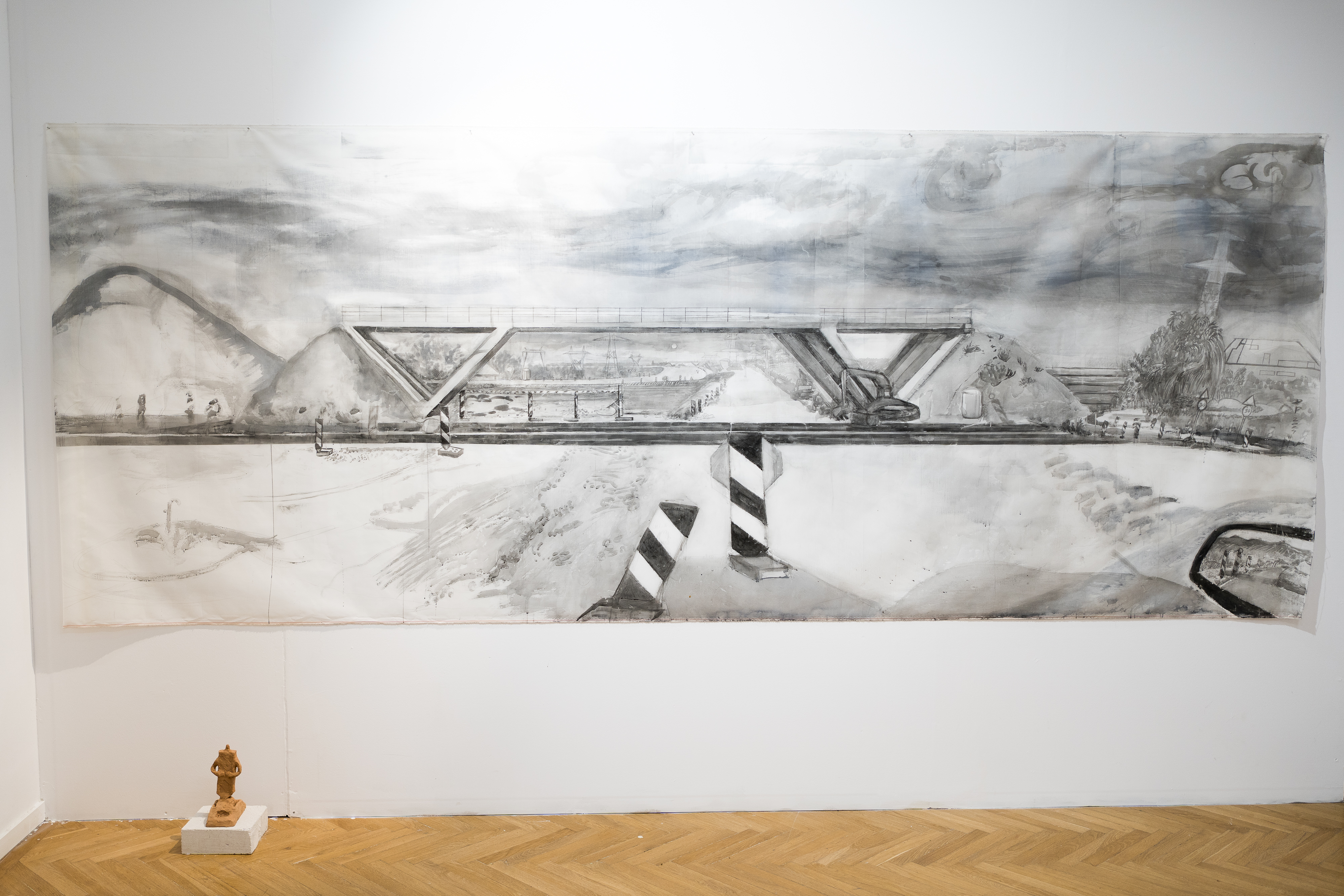
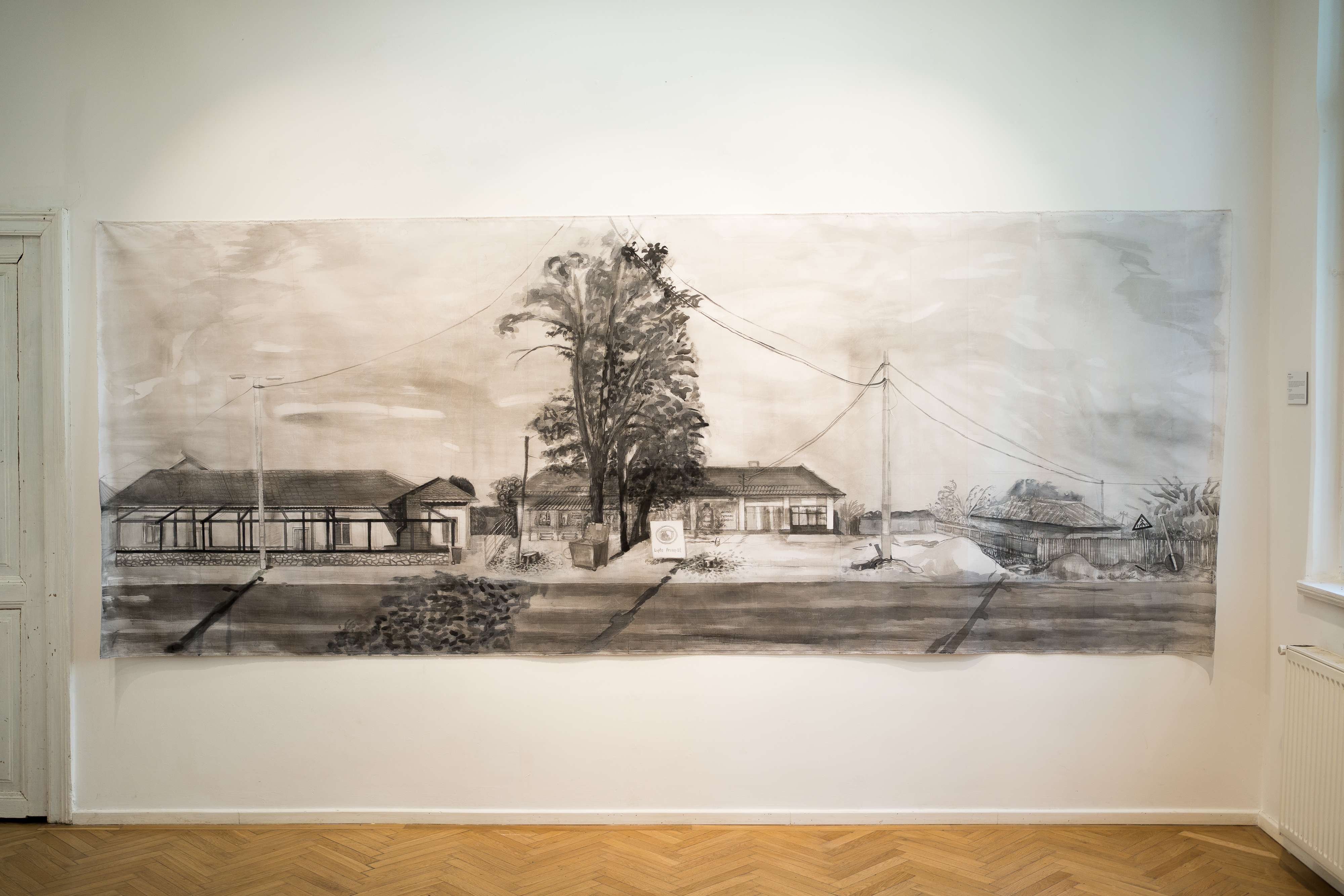
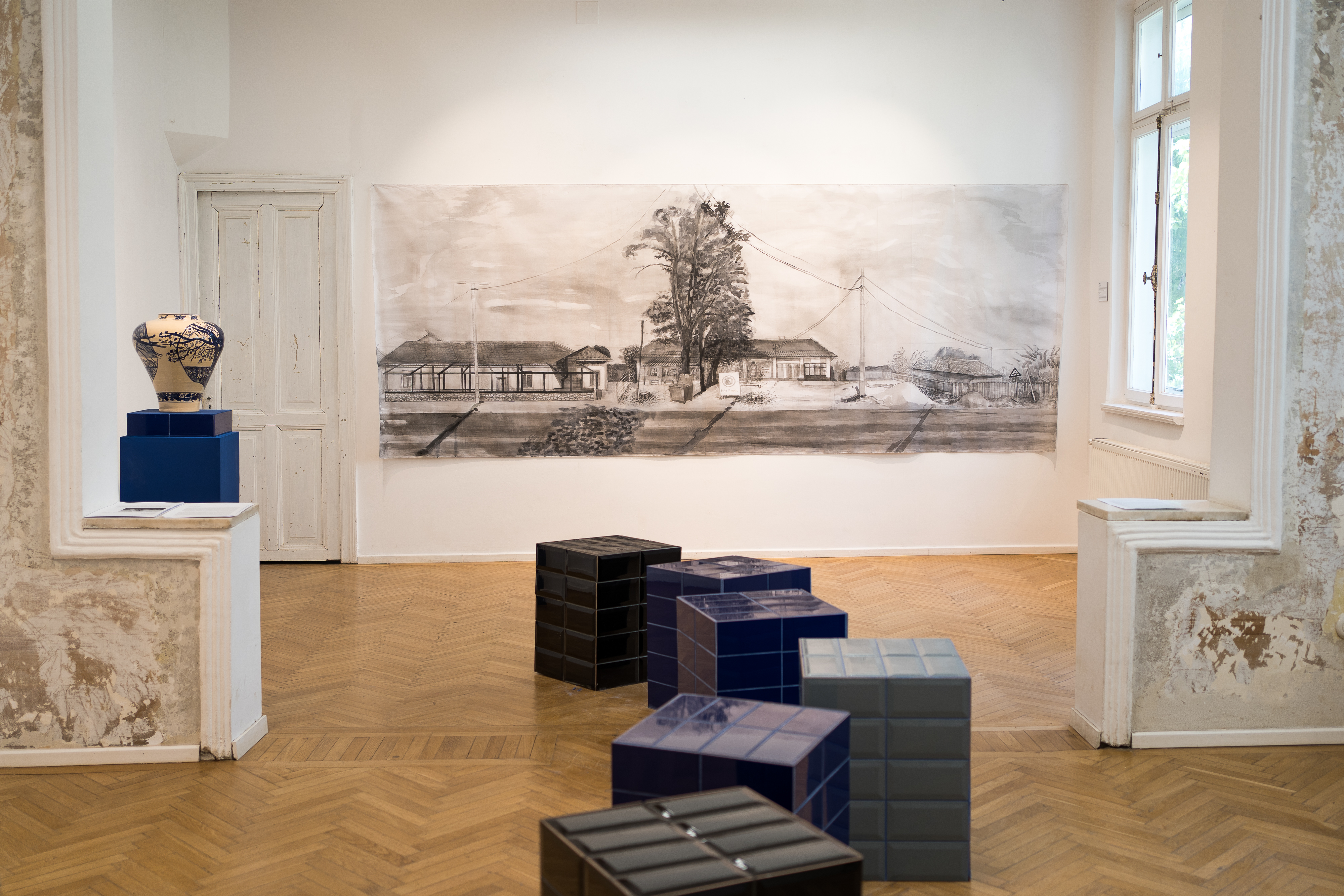
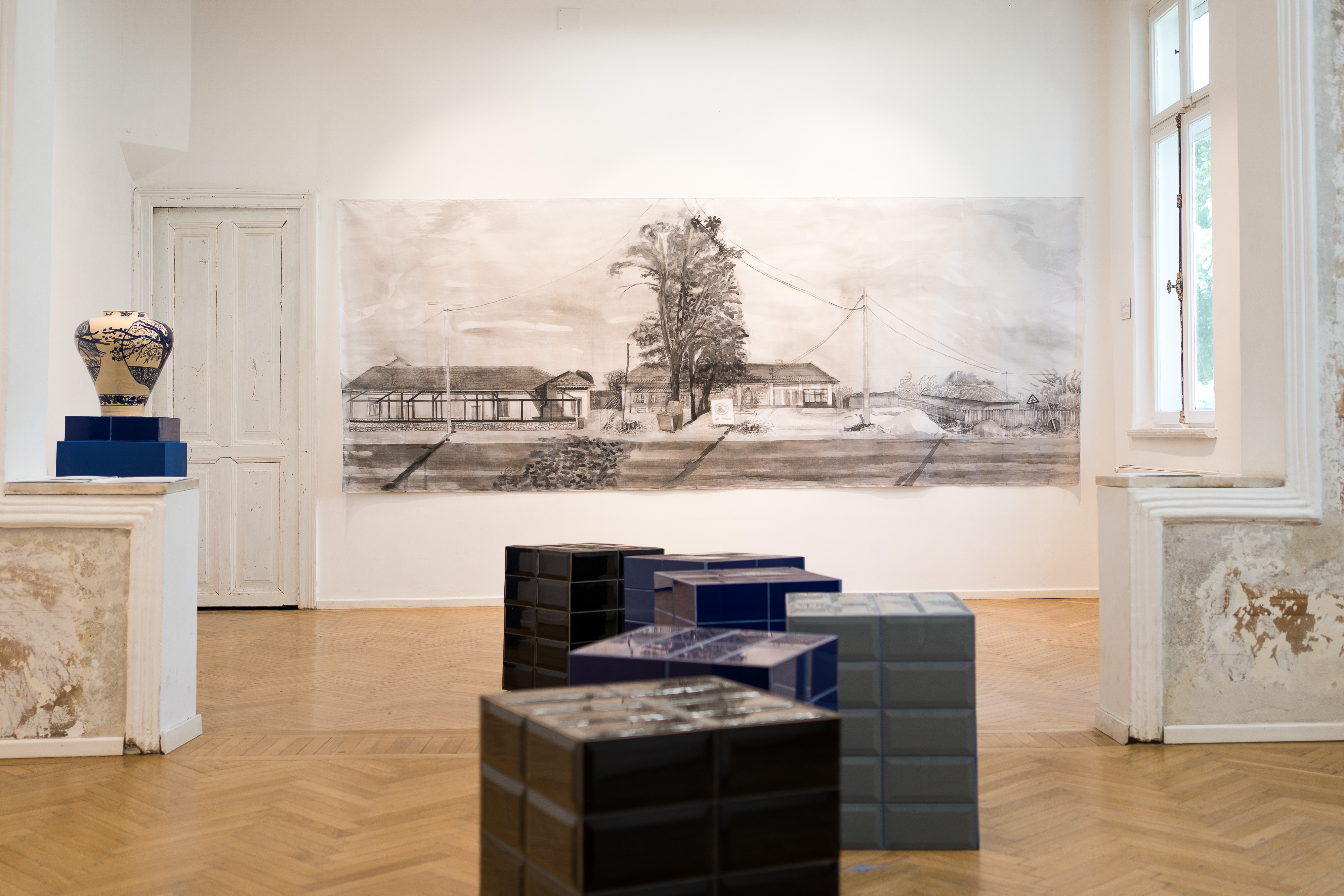
Delia Popa and I share a desire to make rural areas visible. It remains an unthought-of part of the collective imagination. We speak of the countryside as if it were an undefined, unlocated space, as if it were a non-place. For my part, as an exhibition curator, I’m working on a very long-term project called Agir dans son lieu. Since 2016, I’ve been working to transpose into the art world the realities of peasants acting in their places in France. Since 2020, Delia Popa has been focusing on her place, the village of Crețești located in the commune of Vidra, in southern Ilfov County. In her grandparents’ house, she establishes her studio. As in the work of Ana Lupas, Delia Popa’s aim is to enhance the value of an invisible and unthought-of heritage. In 2022, starting from this precise location, she works in harmony with the house: the furniture, the ceramic tiles adorning the wood-burning stove, the architecture, the wood, the everyday objects. She also works with the garden ecosystem: the walnut tree, the greenhouse, the crops, the human and more-than-human inhabitants. Around the house, she spends time observing and documenting climatic, structural and topographical changes. Delia Popa observes the ways in which human constructions take precedence over living things. In this way, she photographs moments of change and transformation in the village: trees lying down, trees deliberately cut down, the construction of a bridge, housing, shops. Crețești is in a state of flux. And that’s exactly what the artist is concerned with: a mutation that has both a cheerful dimension and critical aspects.
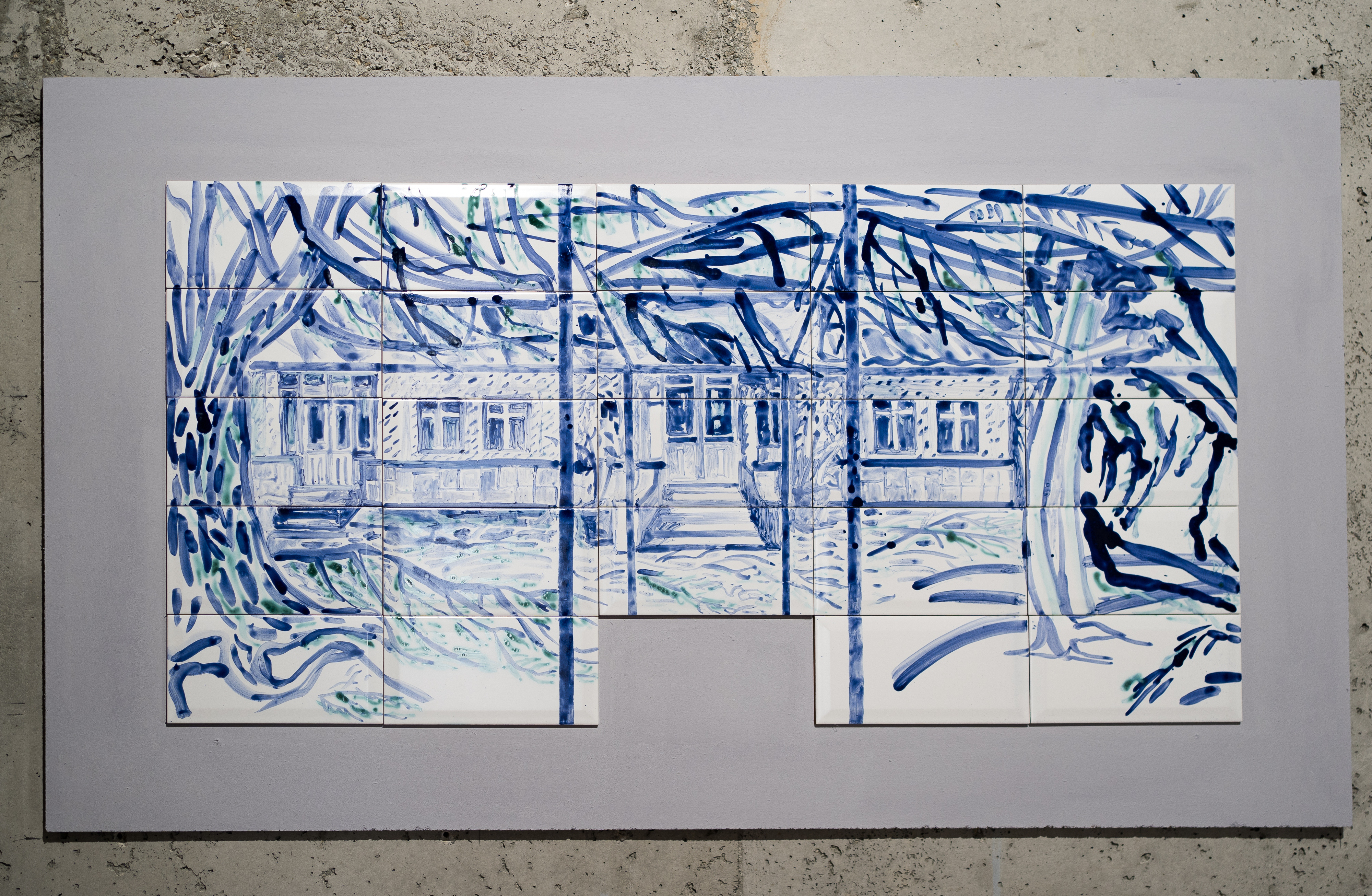
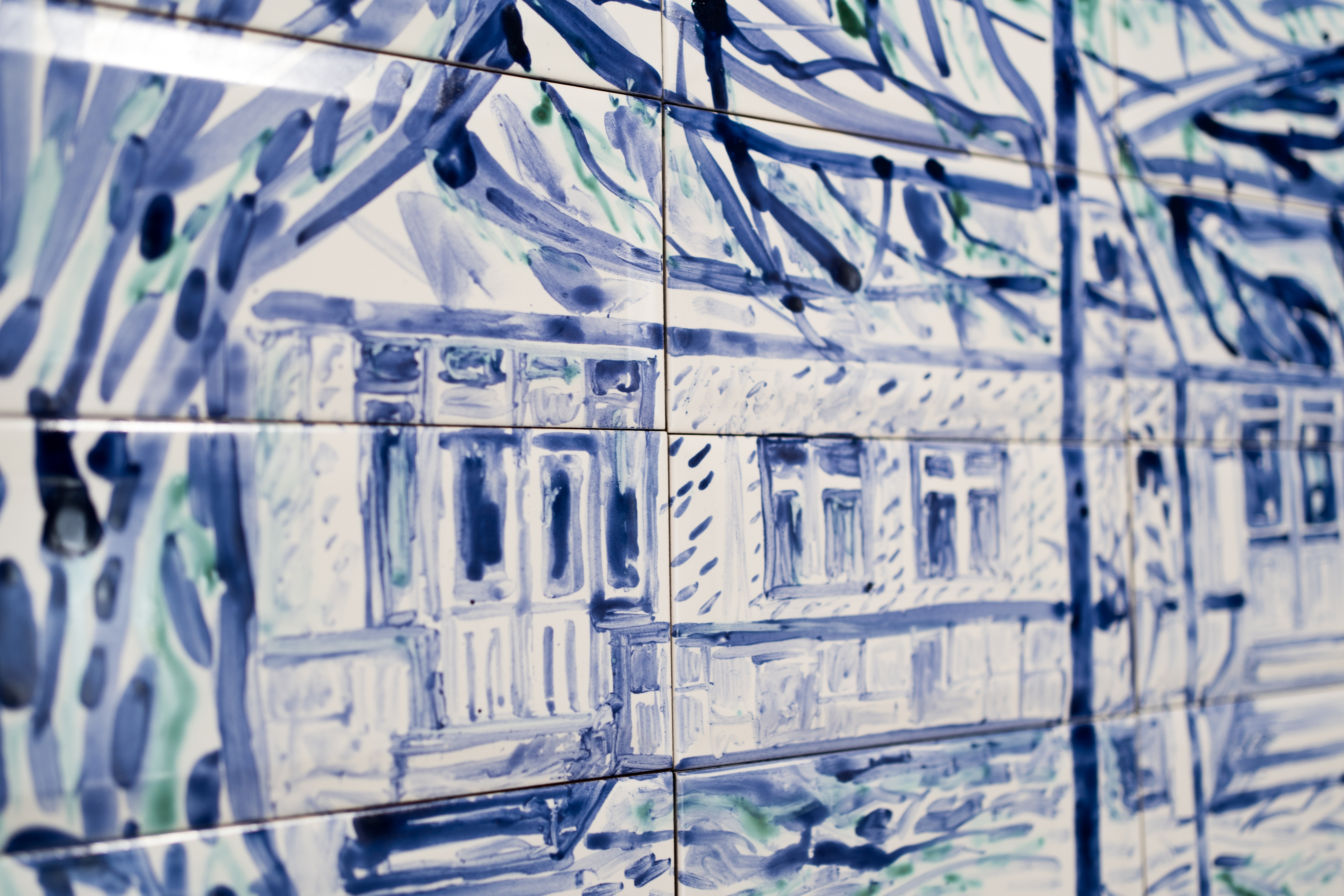
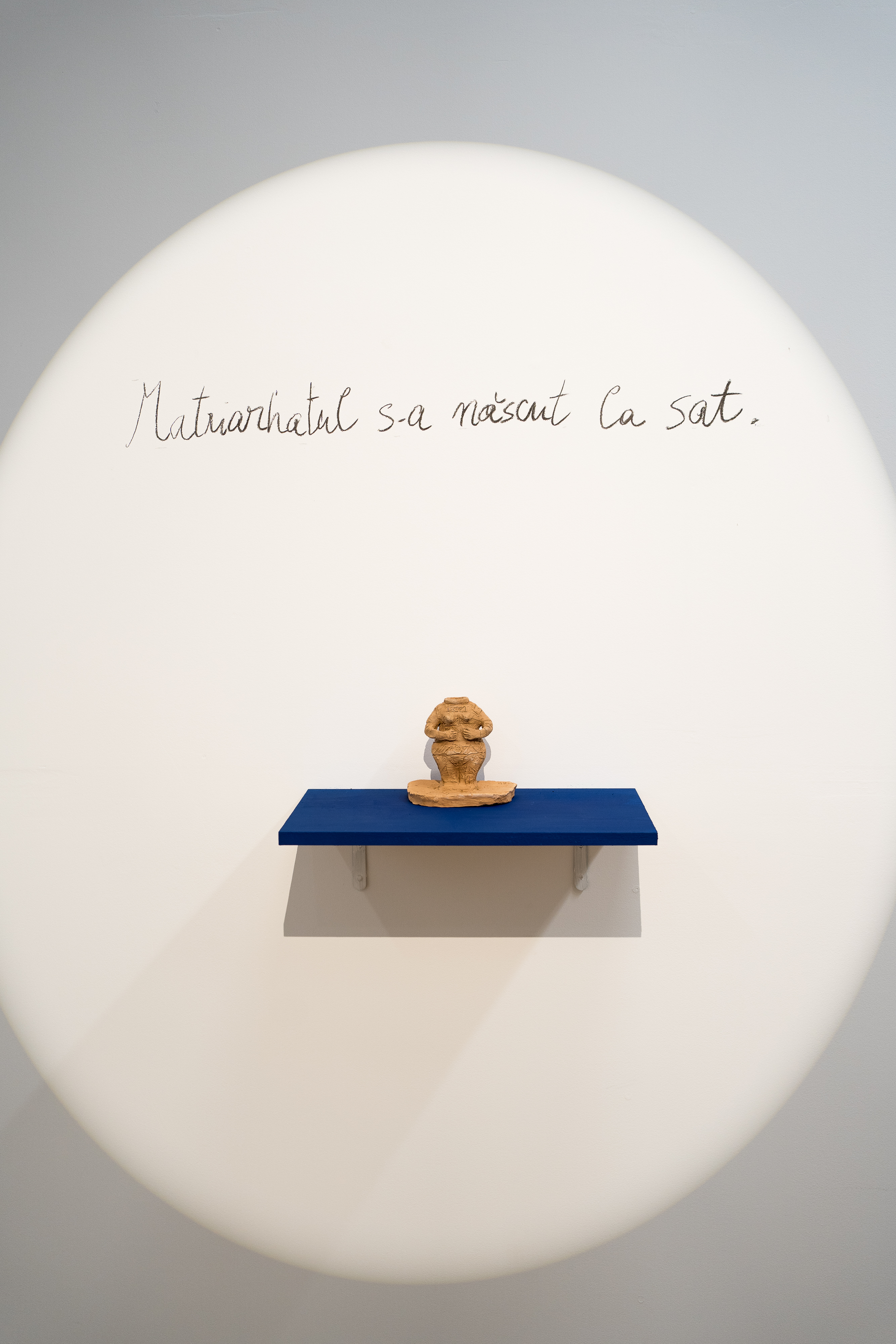
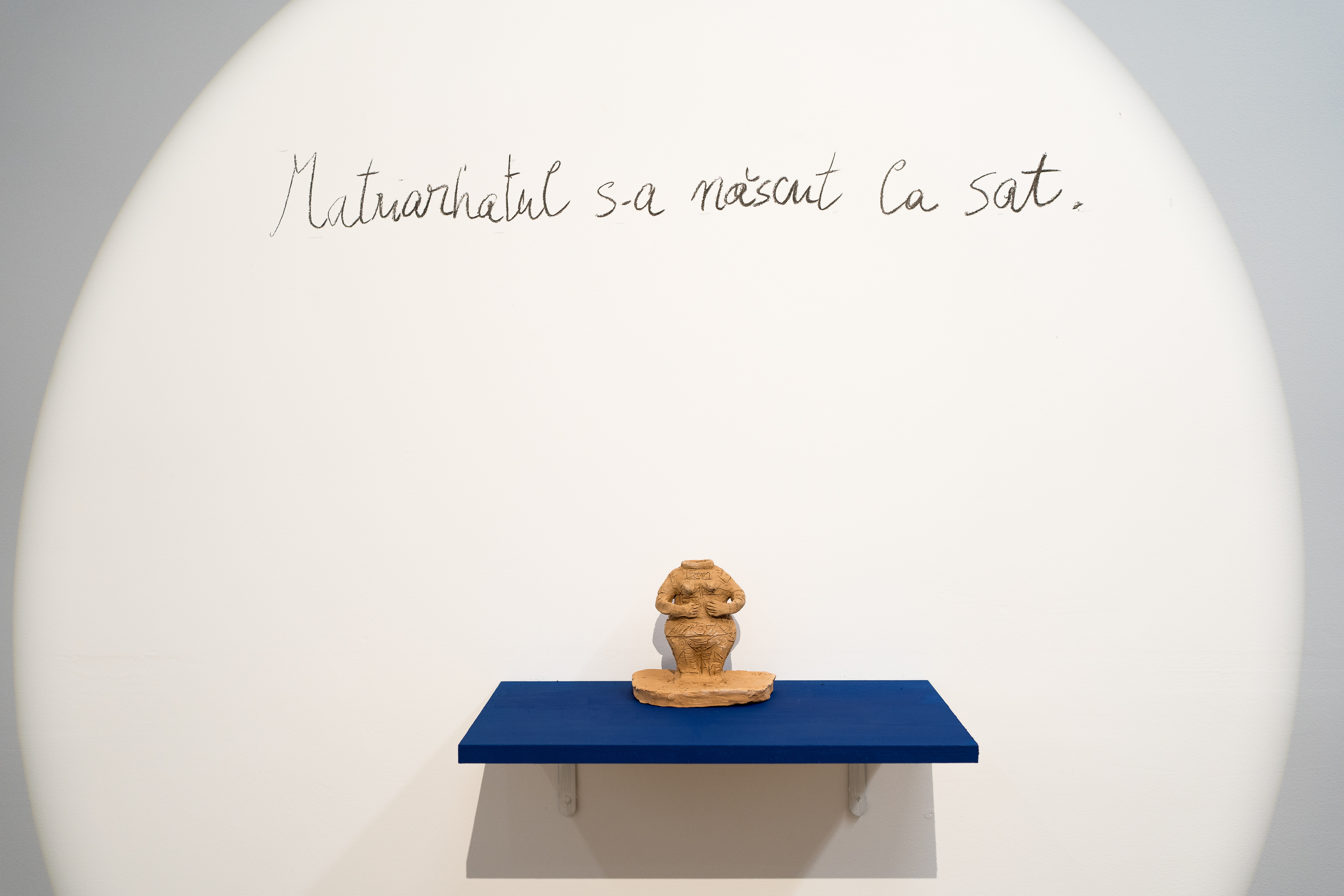
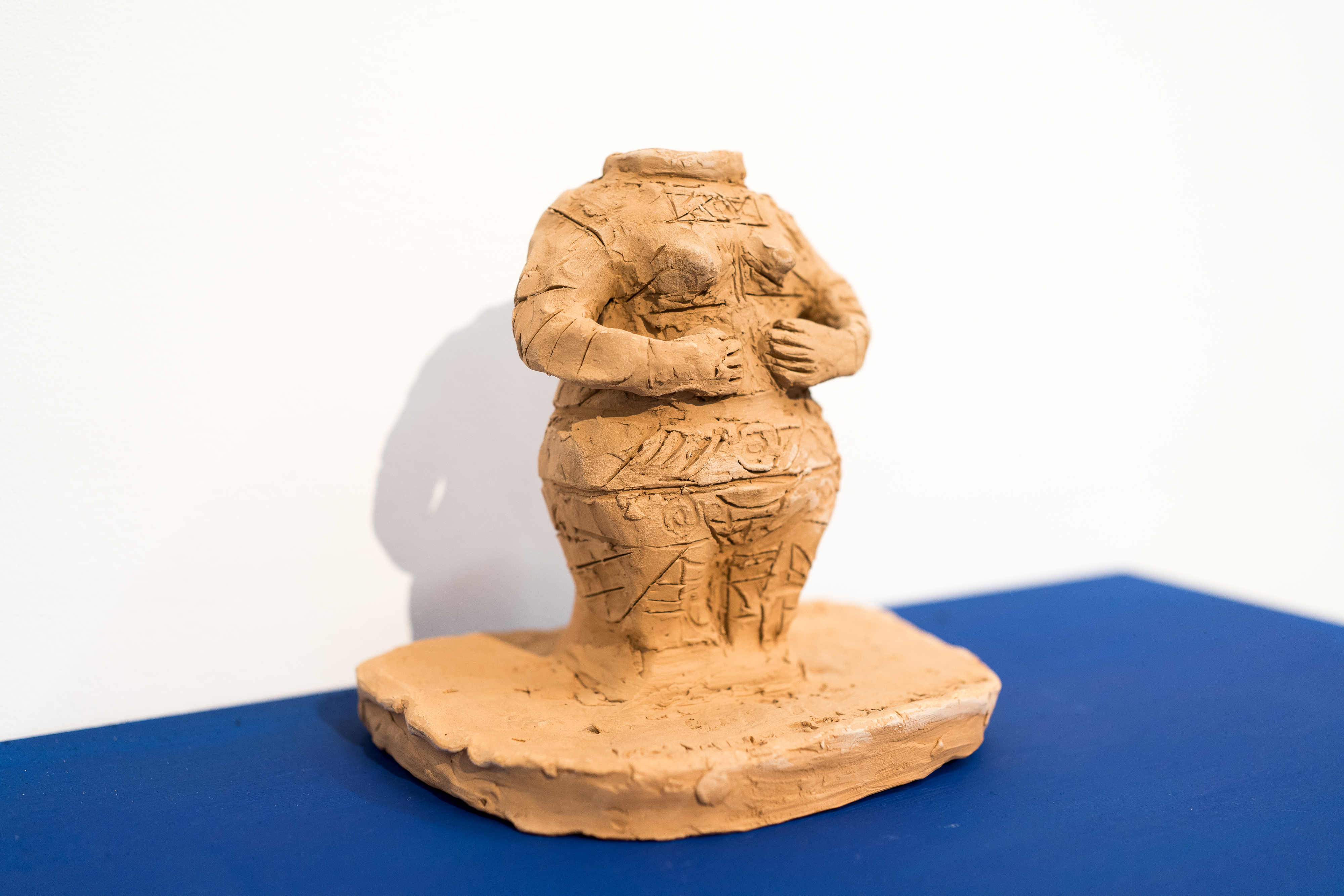
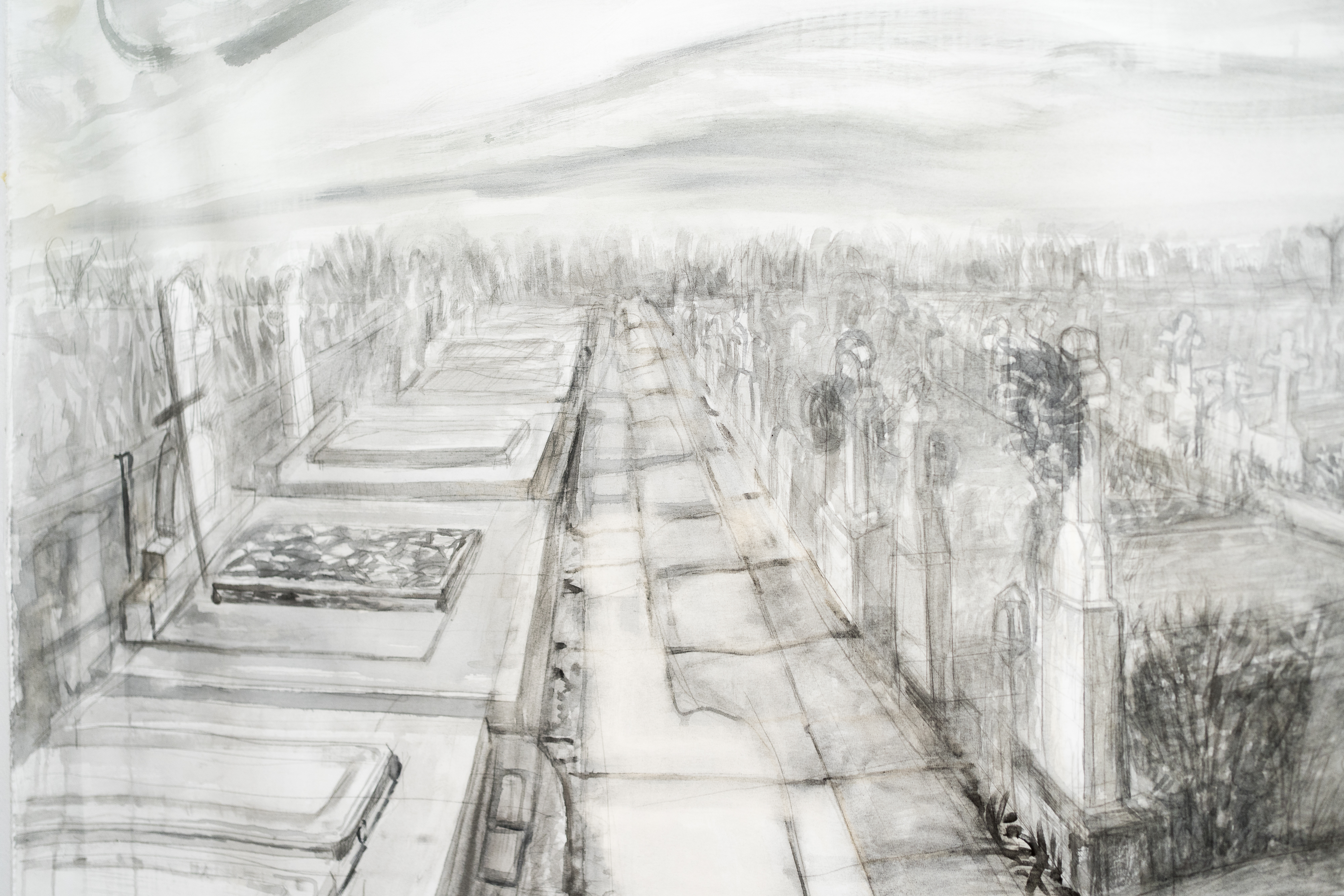
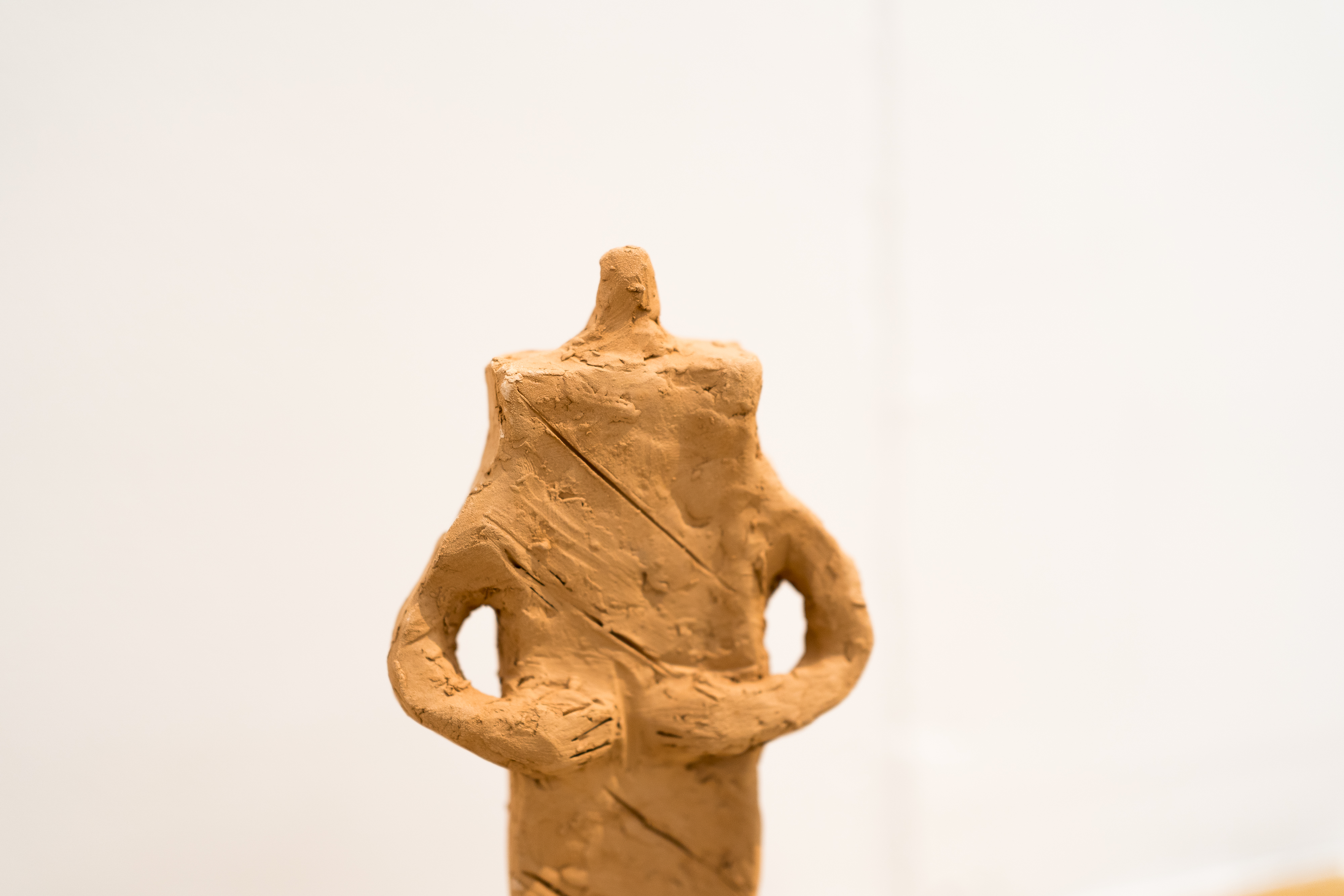
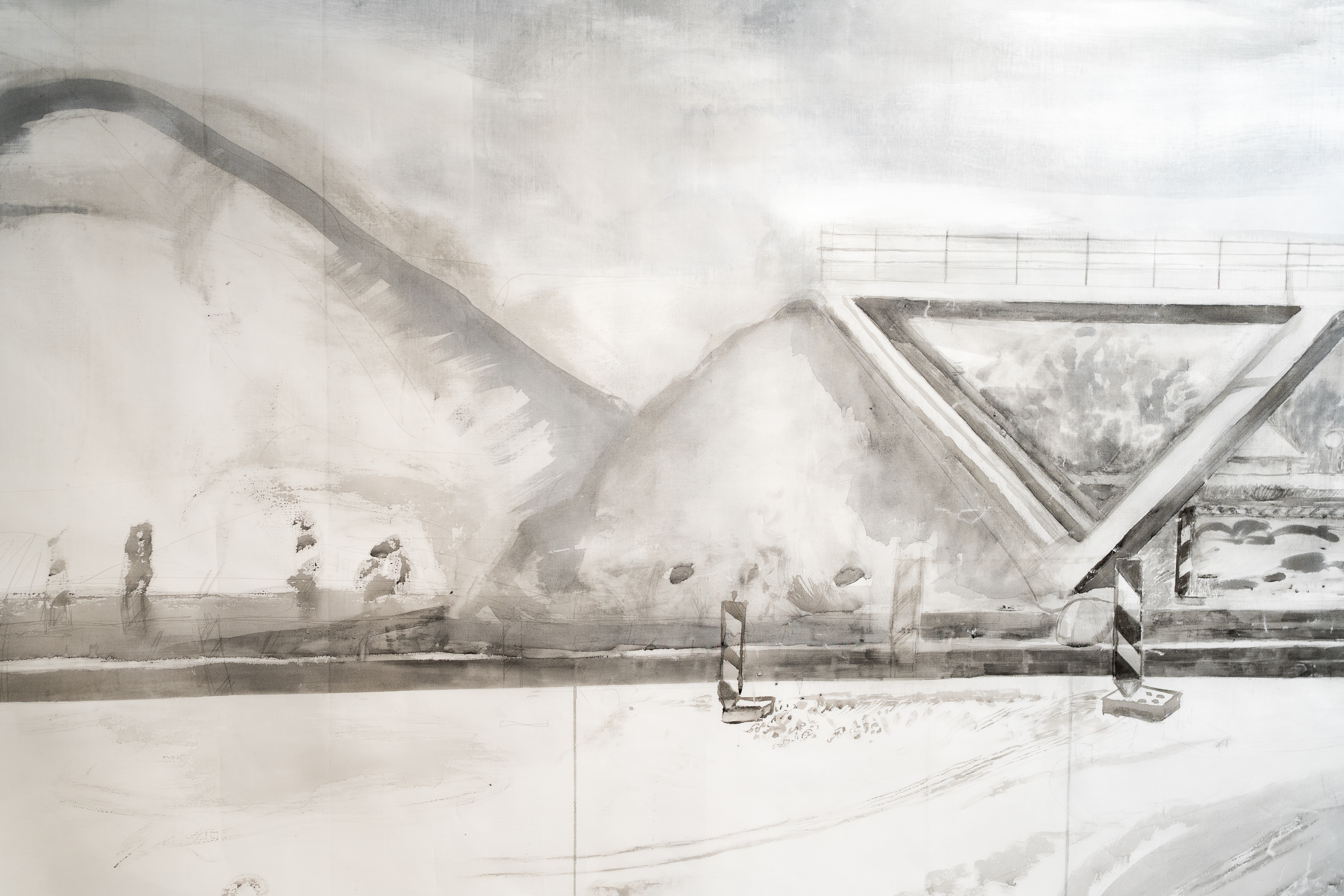
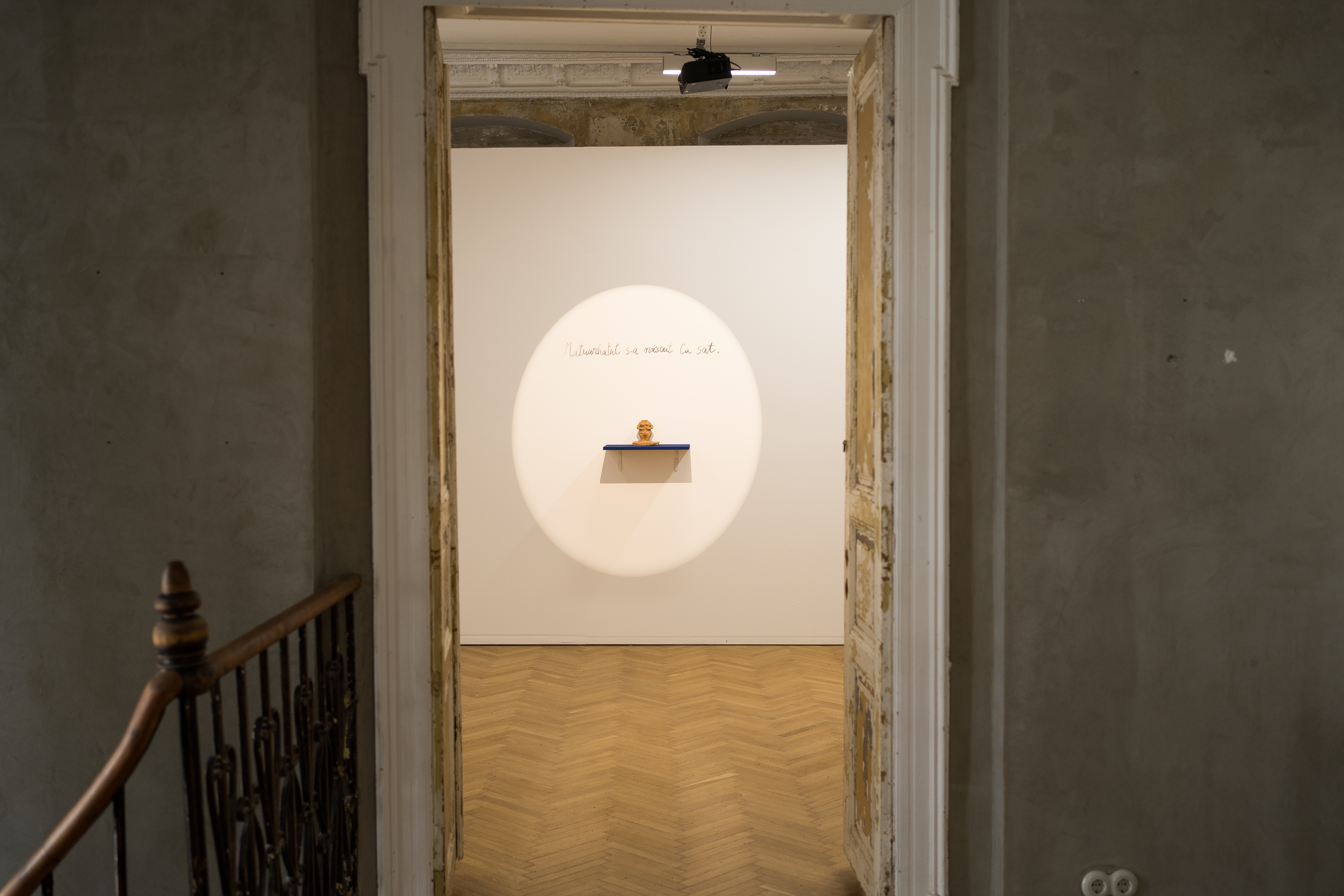
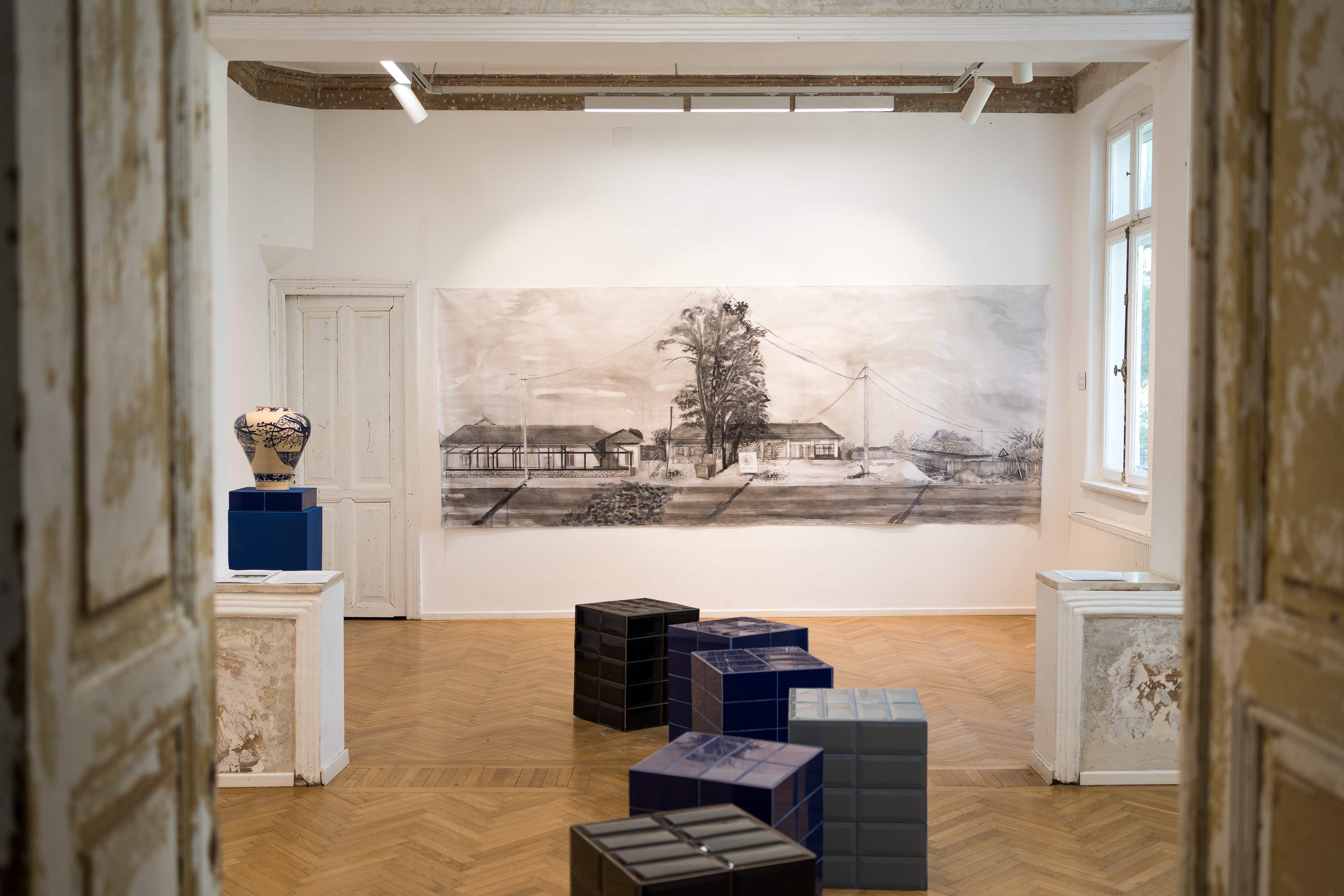
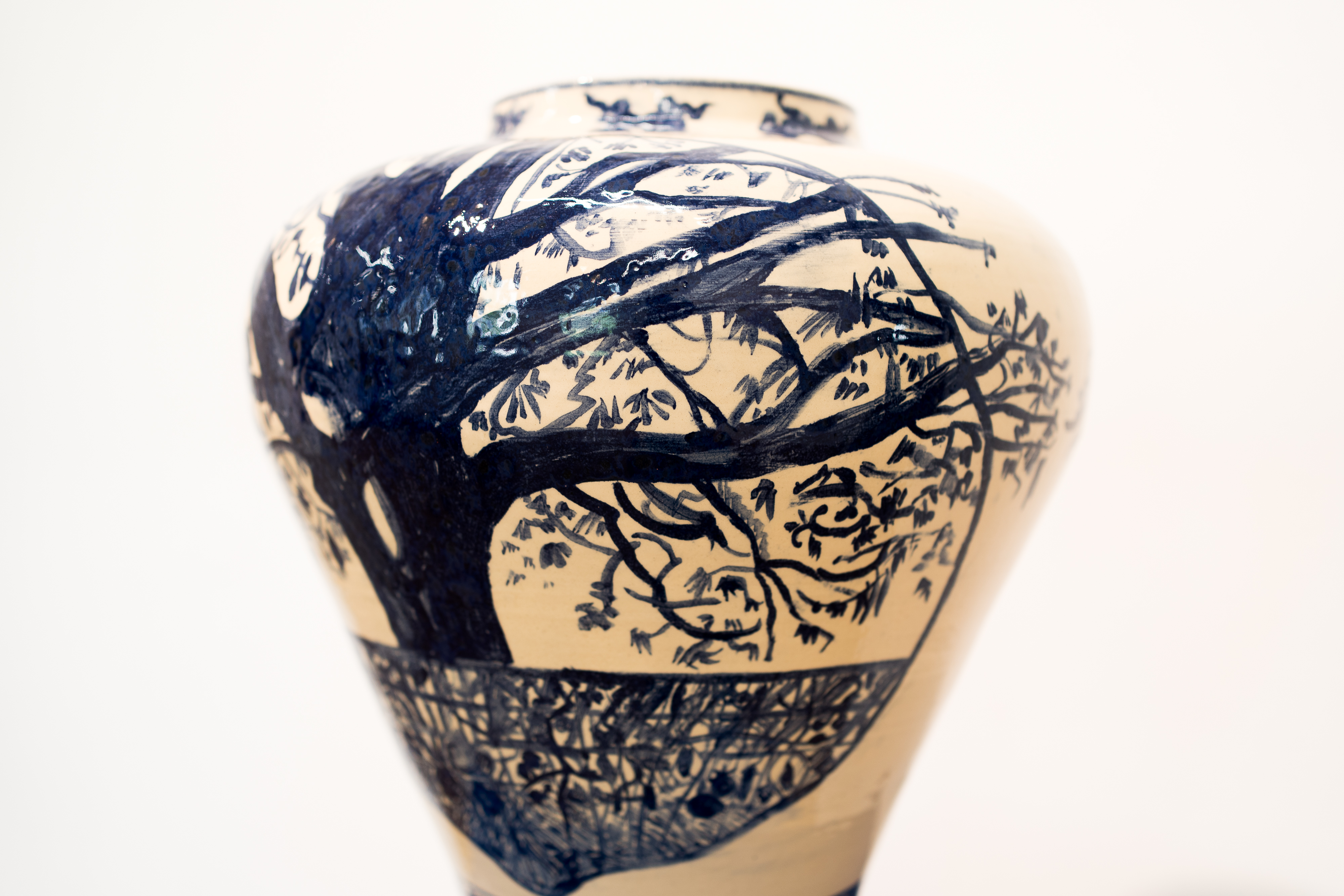
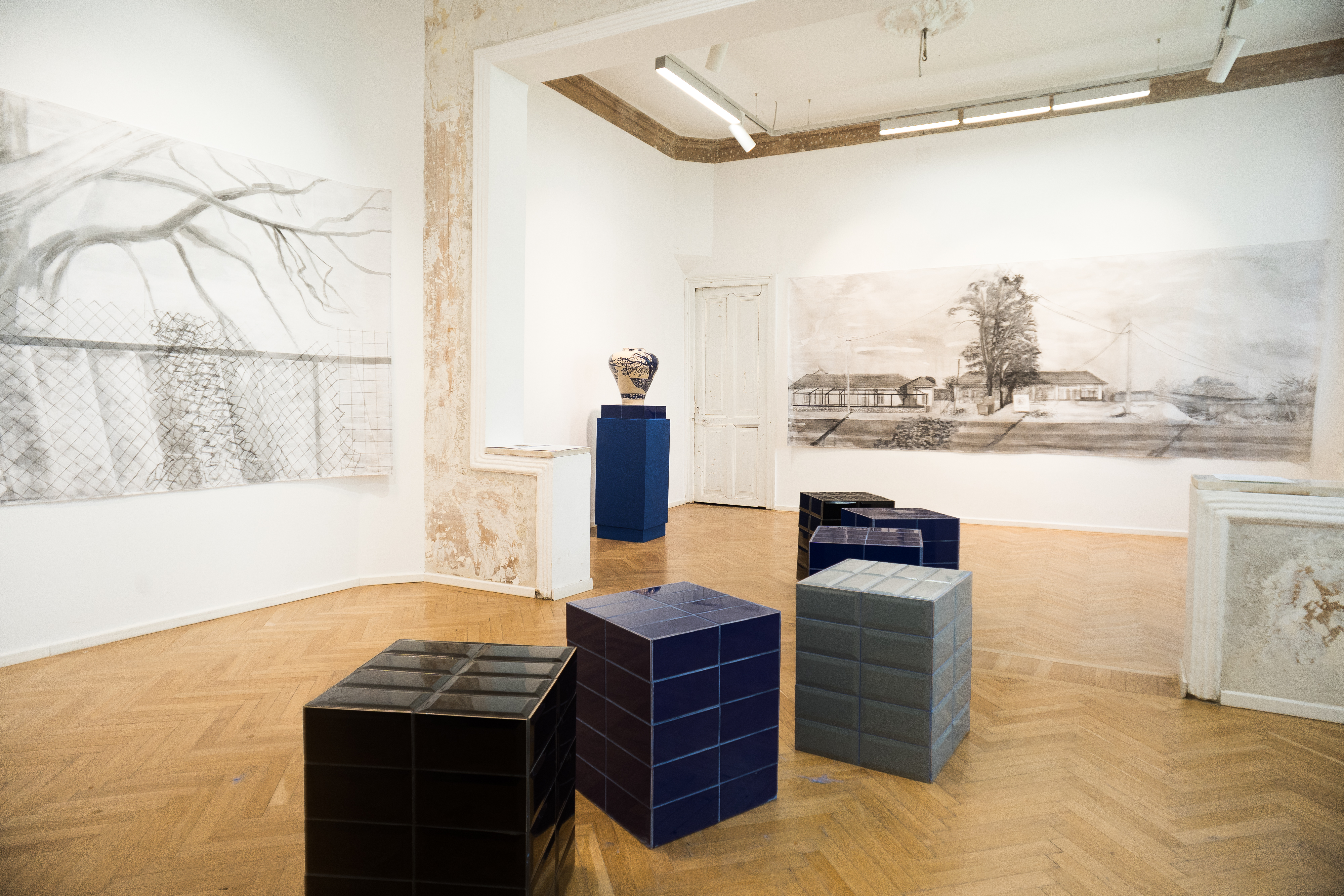
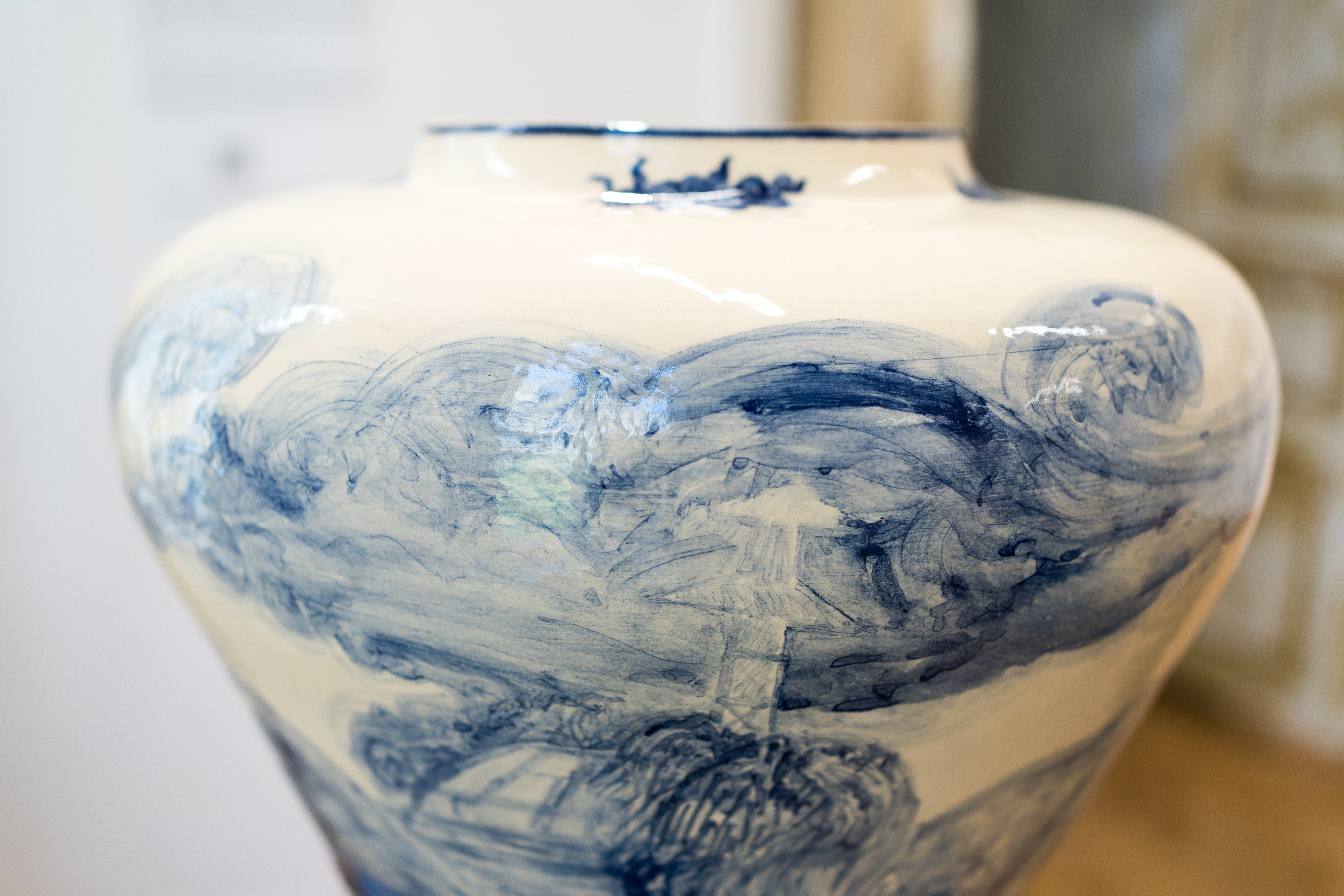
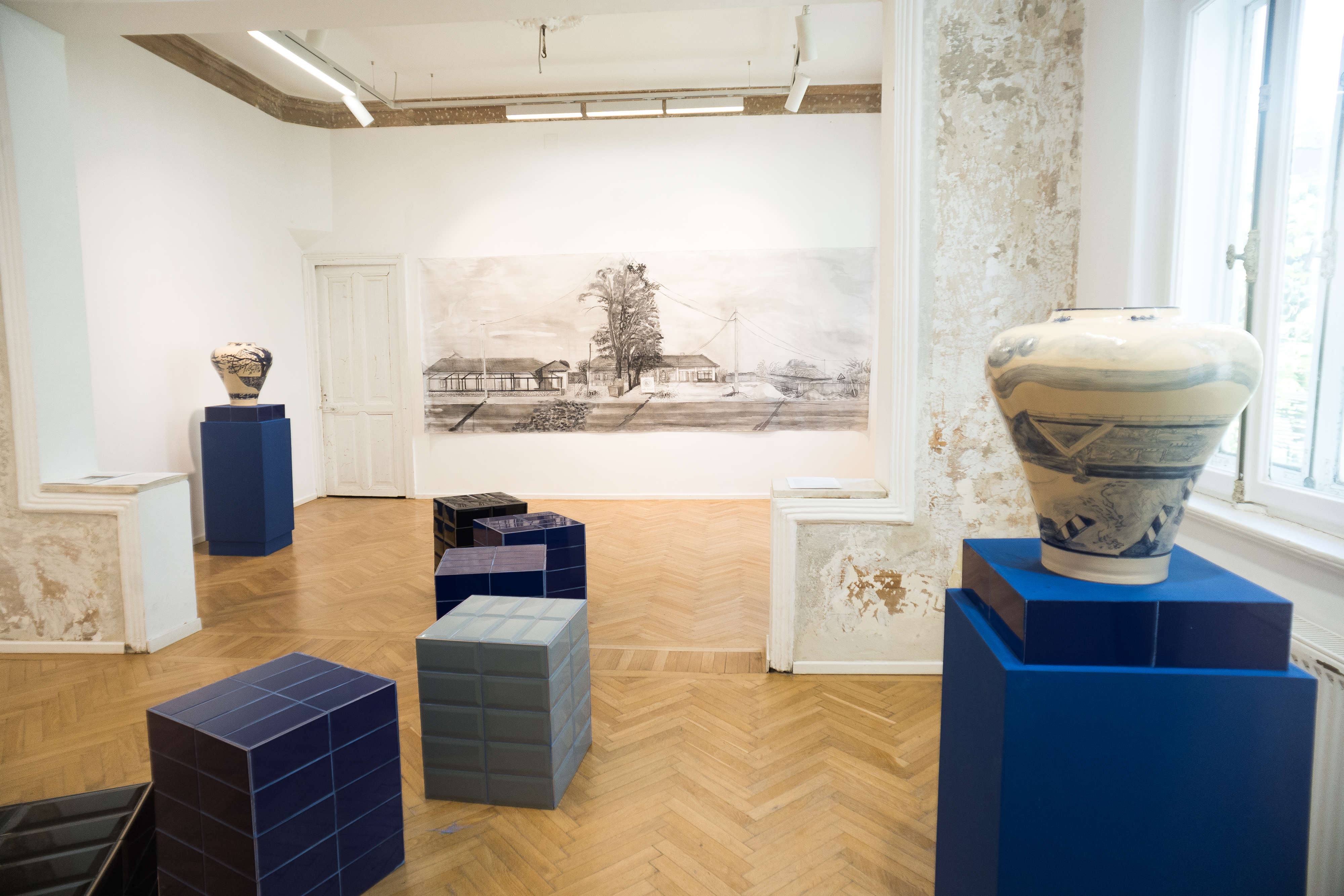
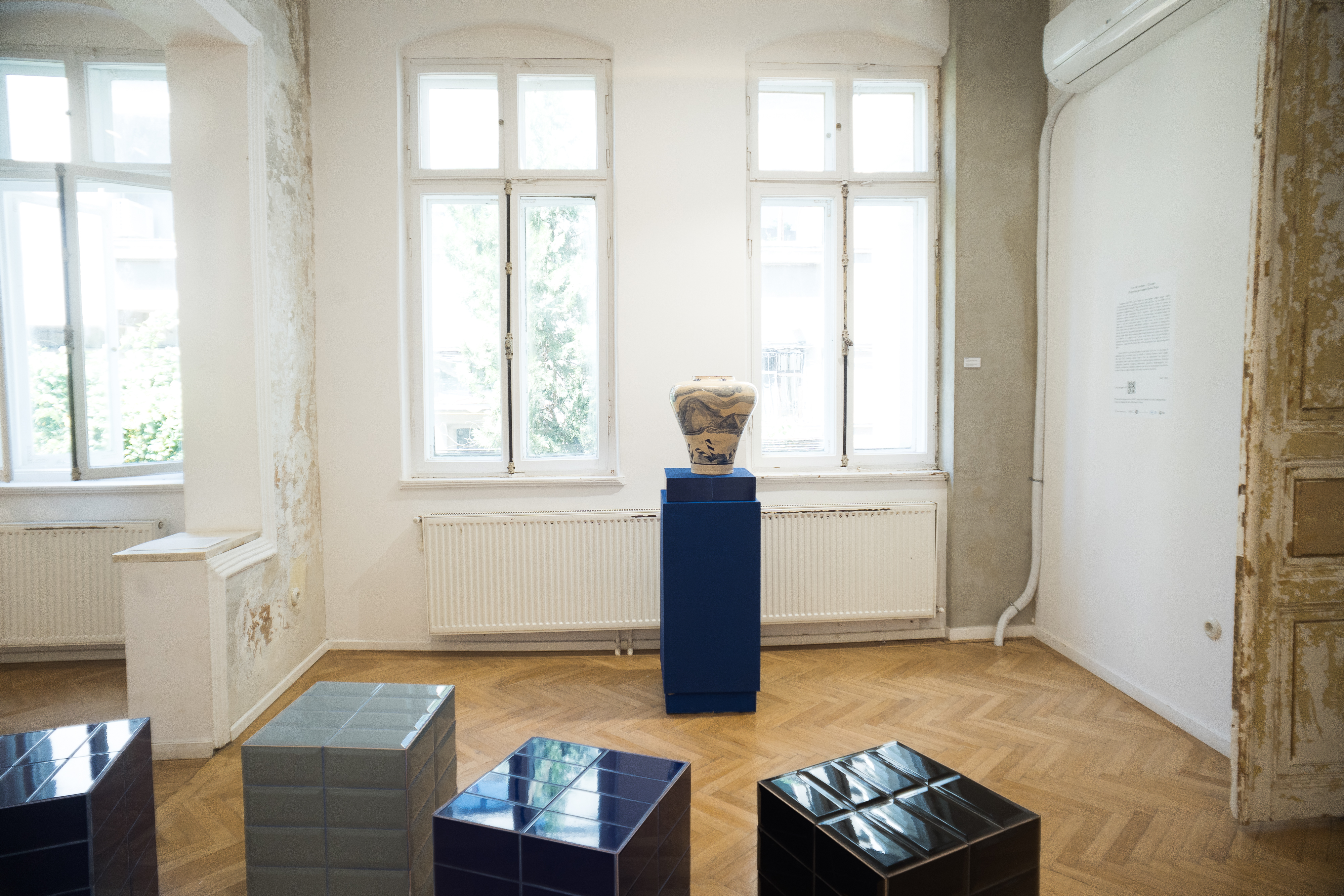
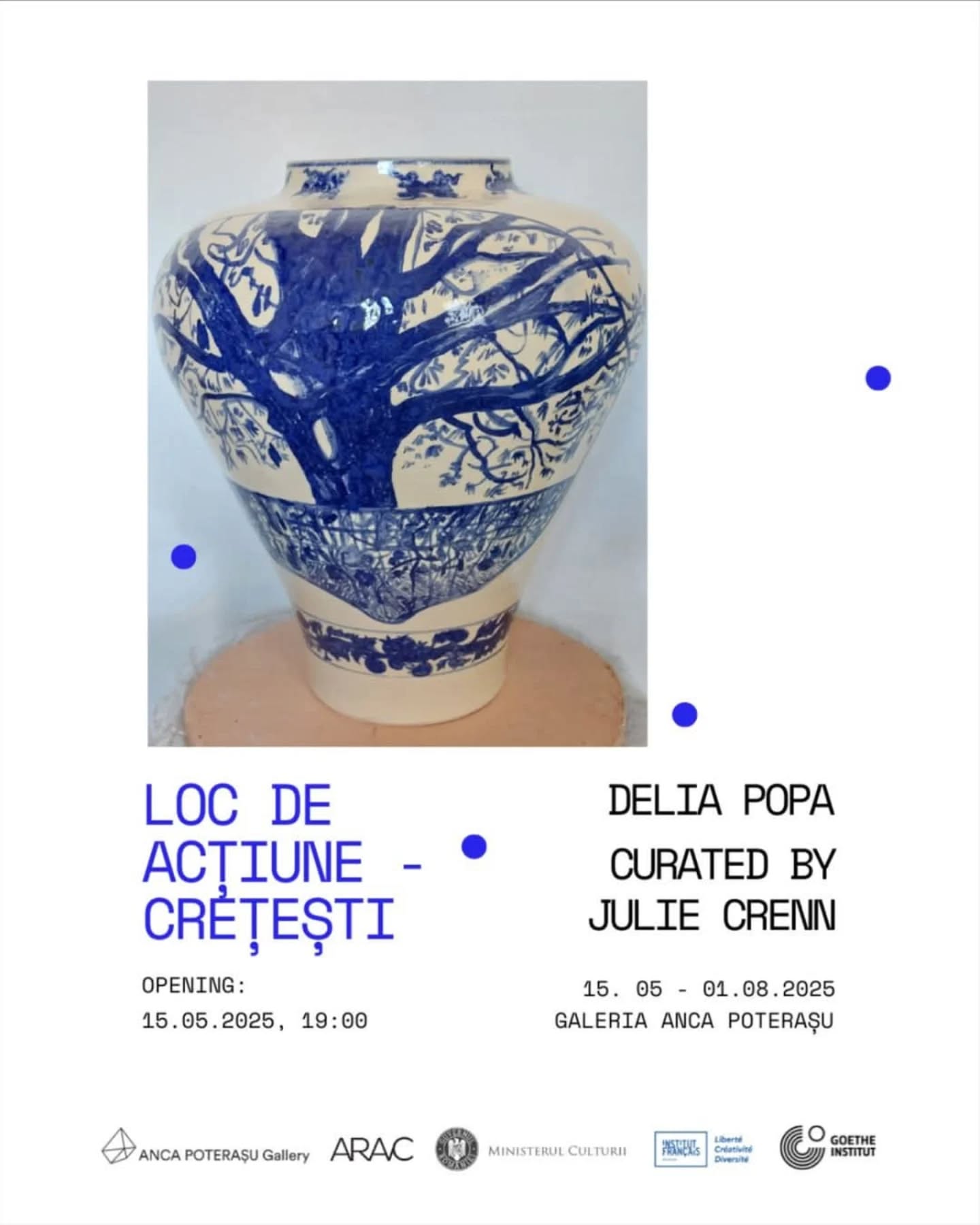
The photographs give rise to a reflection based on a classic, academic pictorial genre: the landscape. Delia Popa takes landscape scenes from the village and transposes them into paintings on paper. To escape Western references and codes, the artist turns her gaze to the East, and more specifically to China. For her, it’s a question of displacing the Western sphere of influence to envisage other perspectives and other cultural circulations. Delia Popa explains: “The project proposes to look at culture(s) as permeable, impure and mutually influenceable. If we think of the Silk Road, one of the first instruments of globalization, we learn that economic and cultural objects have traveled across Eurasia, long before the Americas have been colonized, and have meant constant exchange between actors as diverse as: Azerbaijan, China, Korea, Egypt, Indonesia, Iran, Iraq, Italy, Japan, Kazakhstan, Kyrgyzstan, Malaysia, Mongolia, Pakistan, Russia, Sri Lanka, Syria, Tajikistan, Turkey, Turkmenistan, Ukraine and Uzbekistan.” Crețești’s landscapes are also present on vases made from porcelain, stoneware and terracotta. The shape of the vase is inspired by Korean art and is also found in Chinese art. The paintings and painted vases anchor Delia Popa’s thinking in an intercultural history. On the wall, clay statuettes refer to the Venus de Vidra. The artist shifts the Romanian Neolithic Venus to other imaginary divinities dedicated to joy, trees, play, waste, the river, monuments, the sun, children and adolescents. The (pre)historical anchoring thus generates the creation of a mythology attached to Crețești.
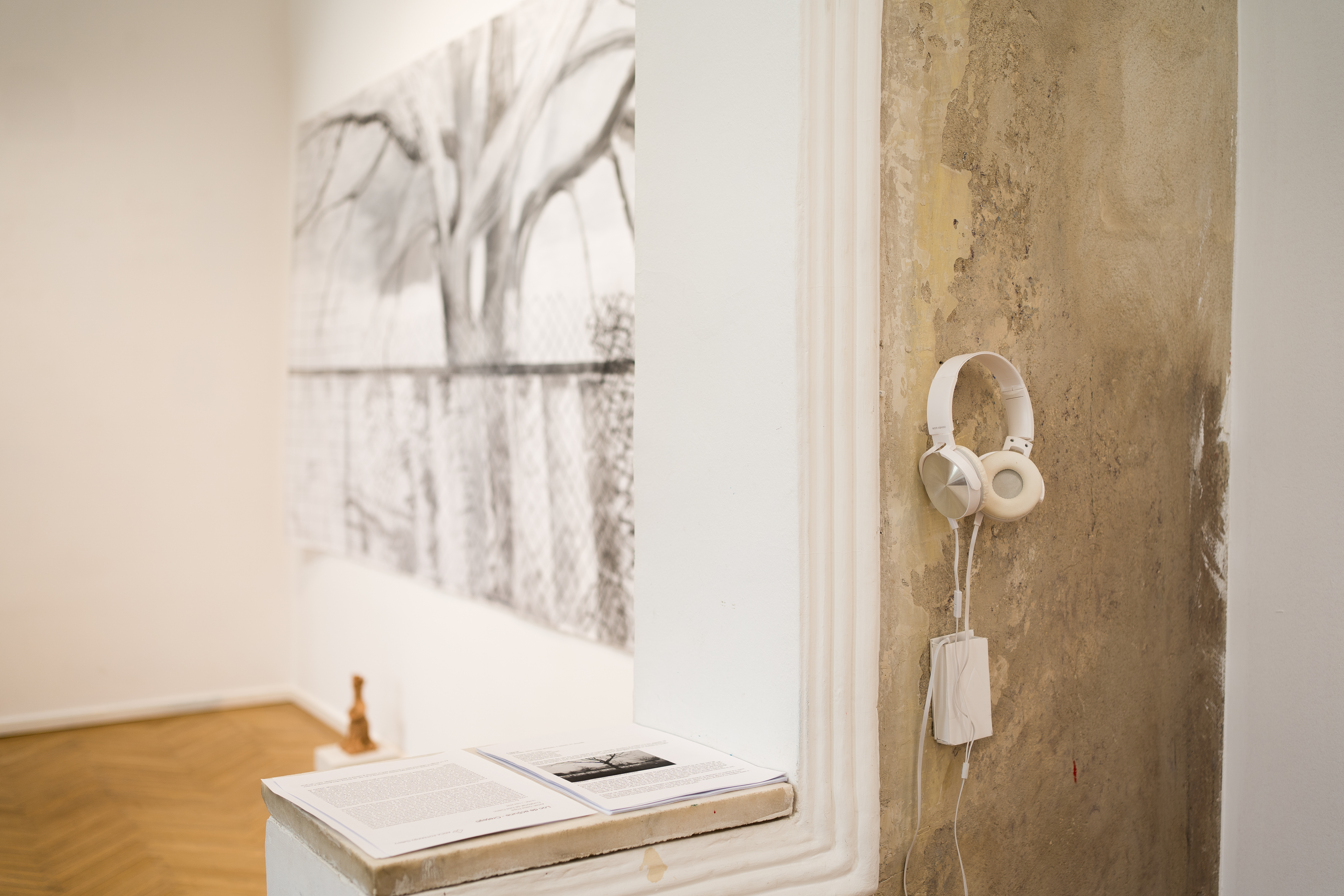
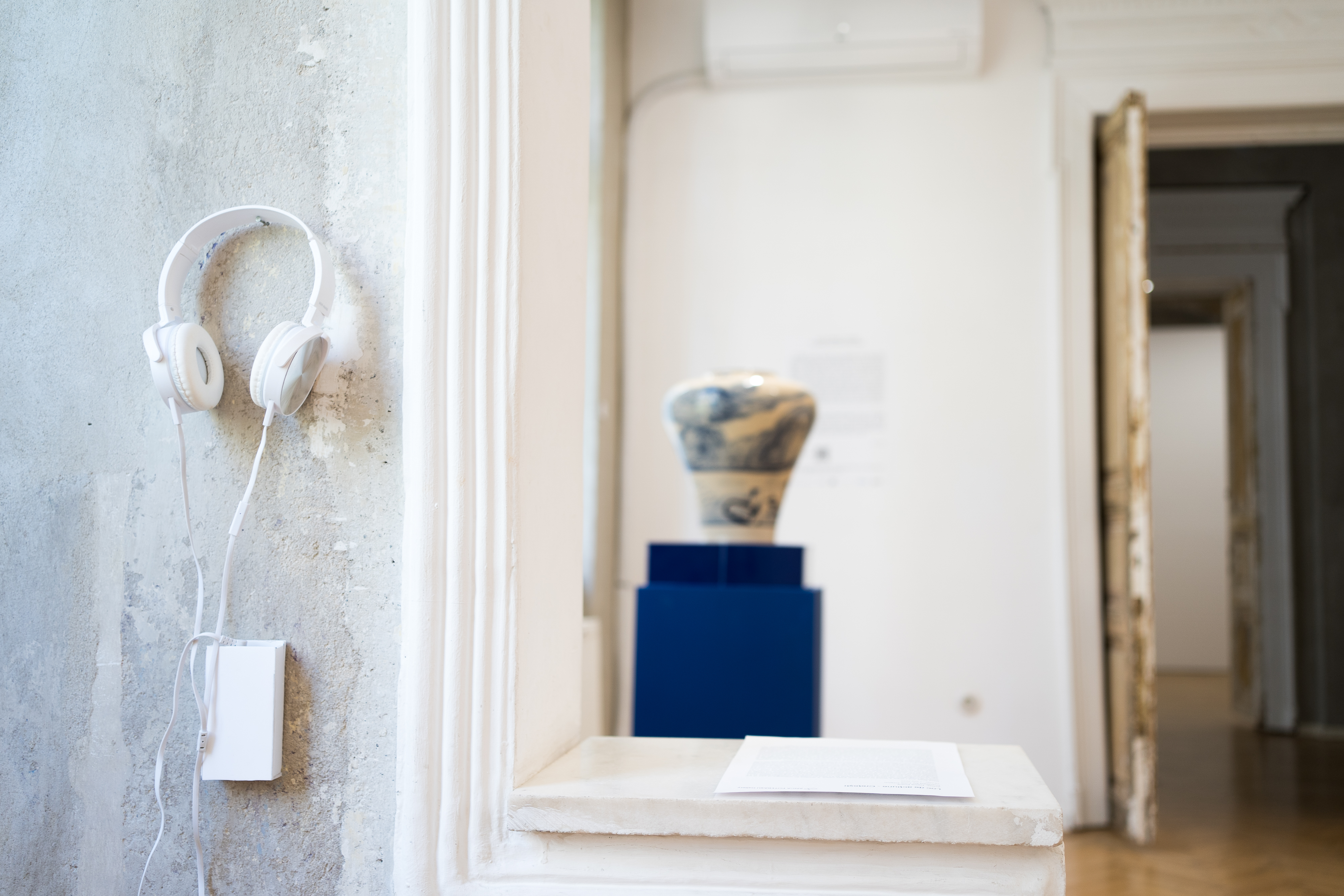
The artist’s voice tells us about her experience in the village, on the road to Bucharest and back. She draws us into her travels, her emotions, her criticisms and her love for Crețești. So, since 2020, Delia Popa’s ambition has been to fabricate a space of representation where cultures and practices sediment: architecture, vernacular techniques, traditions, landscapes, materials, gestures, crafts, etc. The paintings and ceramic works participate in a reconnection of Crețești’s inhabitants with their shared history and present. Why? Delia Popa writes: “Why then is this rural world important? Because 46% of Romanians live there, we all come from there and it is a world (still) connected to nature, although that is rapidly disappearing. Because we need to look at what/who we are.” Crețești is thus an artistic, social and political subject in its own right. A subject that generates a de-hierarchization: all places have a value that artists can bring to the fore.
Loc de acțiune – Crețești [Agir dans son lieu – Crețești ]
Delia Popa
Une proposition de Julie Crenn
———————————————————————————————–
Anca Poterasu Gallery, Bucarest
15 mai – 1er juillet 2025
———————————————————————————————–
Avec Delia Popa, nous avons en commun la volonté de visibiliser l’espace rural. Ce dernier demeure un impensé dans l’imaginaire collectif. Nous parlons de campagne comme s’il s’agissait d’un espace non défini, non situé, comme s’il s’agissait d’un non lieu. De mon côté, en tant que commissaire d’exposition, je travaille à un projet au très long cours intitulé Agir dans son lieu. Depuis 2016, je m’attèle à transposer dans le monde de l’art les réalités des paysans qui agissent dans leurs lieux en France. Depuis 2020, Delia Popa se concentre sur son lieu, le village de Crețești situé dans la commune de Vidra, dans le sud du comté d’Ilfov. Dans la maison de ses grands-parents, elle établit son atelier. Tout comme dans l’œuvre d’Ana Lupas, Delia Popa s’inscrit dans une perspective de valorisation d’un patrimoine invisible et impensé. En 2022, à partir de ce lieu précis, elle travaille en accord avec la maison : le mobilier, les carreaux de céramique qui ornent le poêle à bois, l’architecture, le bois, les objets du quotidien. Elle agit aussi à partir de l’écosystème du jardin : le noyer, la serre, les cultures, les habitants humains et plus qu’humains. Autour de la maison, elle mène des temps d’observation en documentant les changements climatiques, structurels, topographiques. Delia Popa observe les manières dont les constructions humaines prennent le pas sur le vivant. Elle photographie ainsi les moments de bascule et de transformation du village : des arbres couchés, des arbres volontairement coupés, la construction d’un pont, l’habitat, les commerces. Crețești est en mutation. C’est bien ce dont l’artiste se préoccupe : une mutation qui comporte aussi une dimension réjouissante que des aspects critiques.
Les photographies donnent lieu à une réflexion basée sur un genre pictural classique et académique : le paysage. Delia Popa prélève ainsi au village des scènes paysagères qu’elle transpose à la peinture sur papier. Pour échapper aux références et aux codes occidentaux, l’artiste tourne son regard vers l’est et plus spécifiquement vers la Chine. Il s’agit pour elle de déplacer la sphère d’influence occidentale pour envisager d’autres perspectives et d’autres circulations culturelles. Delia Popa explique : « Le projet propose de considérer la (les) culture(s) comme perméable(s), impure(s) et mutuellement influençable(s). Si nous pensons à la Route de la Soie, l’un des premiers instruments de la mondialisation, nous apprenons que des objets économiques et culturels ont voyagé à travers l’Eurasie, bien avant que les Amériques ne soient colonisées, et ont signifié un échange constant entre des acteurs aussi divers que : Azerbaïdjan, Chine, Corée, Égypte, Indonésie, Iran, Irak, Italie, Japon, Kazakhstan, Kirghizstan, Malaisie, Mongolie, Pakistan, Russie, Sri Lanka, Syrie, Tadjikistan, Turquie, Turkménistan, Ukraine et Ouzbékistan. » Les paysages de Crețești sont aussi présents sur les vases réalisés à partir de porcelaine, de grès et de terracotta. La forme du vase est inspirée de l’art coréen et que nous retrouvons aussi dans l’art chinois. Les peintures et les vases peints ancrent la réflexion de Delia Popa dans une histoire interculturelle. Les statuettes en argile font référence à la Vénus de Vidra. L’artiste déplace la vénus néolithique roumaine vers d’autres divinités imaginaires dédiées à la joie, aux arbres, au jeu, aux déchets, à la rivière, aux monuments, au soleil ou encore aux enfants et aux adolescents. L’ancrage (pré)historique génère ainsi la création d’une mythologie attachée à Crețești.
La voix de l’artiste nous raconte son expérience du village, de la route vers Bucarest et inversement. Elle nous entraîne dans ses déplacements, ses émotions, ses critiques et son amour envers Crețești. Alors, depuis 2020, Delia Popa ambitionne de fabriquer un espace de représentation où sédimentent les cultures et les pratiques : architecture, techniques vernaculaires, traditions, paysages, matériaux, gestes, artisanat, etc. Les peintures et les œuvres en céramiques participent à une reconnexion des habitant.es de Crețești avec leur histoire et leur présent communs. Pourquoi ? Delia Popa écrit que : “Pourquoi ce monde rural est-il important ? Parce que 46 % des Roumains y vivent, que nous en sommes tous originaires et qu’il s’agit d’un monde (encore) lié à la nature, même si celle-ci disparaît rapidement. Parce que nous devons nous interroger sur ce que nous sommes et qui nous sommes.” Ainsi, Crețești un sujet artistique, social et politique en soi. Un sujet qui génère une déhiérarchisation : tous les lieux ont une valeur que les artistes peuvent mettre en avant.
Texte en roumain _
VUES EXPOSITION _ by Vlad Dragne







Plus d’informations :::
- Anca Poterasu Gallery _ https://www.ancapoterasu.com/
- DELIA POPA _ https://www.deliapopa.com/
PRESSE :::
 Julie Crenn
Ping : AGIR DANS SON LIEU | Julie Crenn